

6 Tips to Shift Habits That No Longer Serve You
We talk a lot here at Healthy Monday about forming habits to support a healthy lifestyle, but what about the habits that we want to change? Understanding how habits form can make change feel more manageable. Our brains run many routines on autopilot, which is helpful in some moments but can make it harder to shift patterns that no longer serve us. But with awareness and small steps, change is absolutely possible.
This Monday, take a minute to understand your habits and make space for new ones that align with your goals.
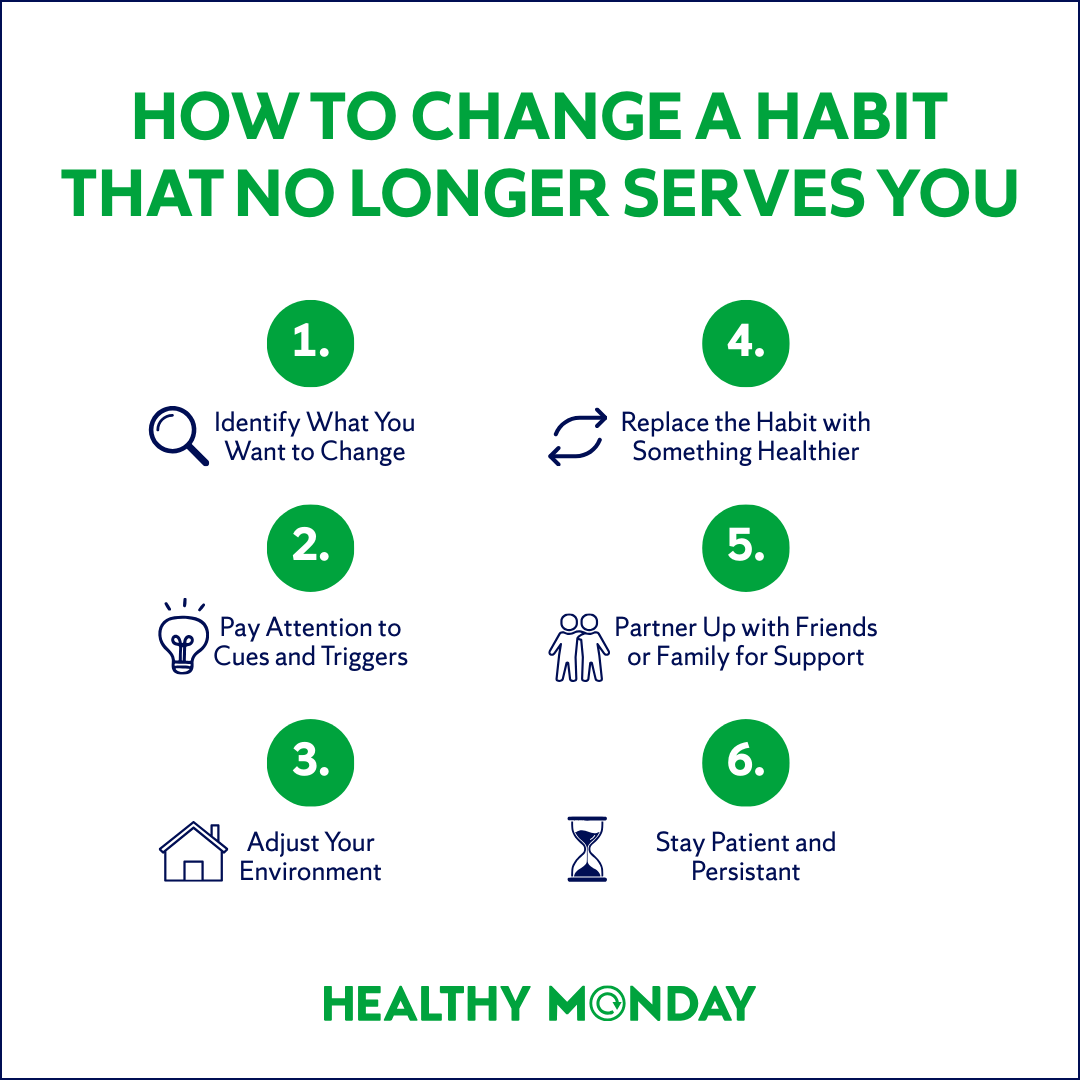
1. Identify the Behavior and Why You Want to Change It
Recognizing that you want to make a change is an empowering first step. Once you realize that a behavior has become automatic, you can make an effort to become more conscious of when it happens and what’s driving it. Understanding why you want to shift a habit can be a very helpful motivator.
2. Notice the Cues That Trigger the Habit
Habits are often linked to cues or signals that prompt a behavior. Before a habit happens, what do you feel or experience? For example, if you want to spend less time on social media, notice whether you reach for your phone when you feel overwhelmed, bored, or tired. Is it more likely to happen at a certain time of day or while you’re doing a specific activity? Being aware of these moments can help you catch the habit sooner and shift your behavior.
3. Adjust Your Environment
Once you’re aware of your cues, you can change your surroundings to make new habits easier and old ones less tempting. For example, if you want to quit smoking but find that weekends or social outings trigger the habit, you might meet up in a new location, invite a friend to take a walk with you, or choose activities where smoking doesn’t naturally fit. Or, if you tend to hit the snooze button, place your phone with your alarm across the room. Small environmental changes can help you shift your habits.
4. Find a Positive Replacement
Habits are easier to change when you replace them rather than simply remove them. Come up with an alternative to the behavior you’d like to shift, and when the urge arises, use it as a cue to practice your new habit. For example, if you’re trying to cut back on added sugar, keep fruit at your desk to satisfy your craving. Or, if you’d like to snack less late at night, make a cup of tea instead.
5. Commit to Change with a Friend
It’s often easier to change habits when we team up with others. Ask a friend, coworker, or family member to join you or cheer you on. Research shows that surrounding yourself with people who practice the habits you aspire to can help new routines stick.
6. Practice Patience and Persistence
Shifting habits takes time, repetition, and compassion for yourself. Every time you make a choice that supports your goals, you strengthen that new pathway in your brain. New habits are formed by repetition, so replacing old habits with new ones is all about persistence. If you slip up, it’s okay—progress is about practice, not perfection.
Recommit Every Monday
It’s much easier to stay in familiar routines, but small shifts in your habits can create the results you want over time. Every Monday gives you a chance to recommit to your goals. Take the first step this week by choosing one habit to shift and practicing the tips above to create lasting change.
Related Articles
Men’s Health: The Signals Your Body Is Sending
Your body sends signals worth paying attention to. Learn three simple ways men can start taking care of themselves, one Monday at a time.

Women’s Health by Decade: Healthy Habits That Grow With You
Women’s health changes over time. Learn healthy habits that support women’s health through your 20s, 30s, 40s, 50s, and beyond.

Heart-Healthy Habits for Women
Heart disease shows up differently in women. Learn key risk factors, recognize symptoms, and practice simple heart-healthy habits you can start this Monday.