
Heart-Healthy Habits for Women
Heart disease is the leading cause of death for women worldwide. Yet much of what we know about the diagnosis and treatment of heart disease comes from research in men. Women have unique risk factors, and cardiovascular symptoms may present differently. As a result, heart disease in women may be undetected or misdiagnosed.
This Monday, learn how heart disease presents in women and practice simple habits that support heart health.
Understanding Heart Disease Risk Factors
Men and women share many of the traditional risk factors for heart disease, including hypertension, high cholesterol, diabetes, tobacco use, physical inactivity, and family history of heart disease. However, some of these factors carry a stronger risk in women—for example, smoking poses up to three times the risk of heart attack for women compared to men.
Women also face a unique set of risk factors. Pregnancy complications like premature birth, gestational diabetes, or preeclampsia can signal a higher risk of heart disease even decades later. Menopause is also a critical transition for women’s heart health. The hormone estrogen has a protective effect on the heart and blood vessels. As estrogen levels naturally decline in menopause, risk factors for heart disease such as blood pressure and cholesterol tend to increase. Early menopause (before the age of 45) is linked to a 50% increased risk for heart disease.
Some risk factors can be supported through everyday habits, while others may require medical guidance or treatment. Because women’s symptoms and risks are often overlooked, starting conversations with a health care provider can help you better understand what steps are right for you.
How Heart Disease Shows Up In Women
Recognizing how symptoms appear in women is an important part of protecting your health. Acute events like heart attacks are often misdiagnosed in women, in part because symptoms don’t always look the way people expect.
Heart attack symptoms in women often differ from the classic crushing chest pain. While chest discomfort is common, many women experience pain in the jaw, neck, right arm, or back, along with sweating, shortness of breath, dizziness, stomach pain, or nausea. Heart attacks in women can have different underlying causes than men’s, some of which don’t show up on standard medical tests. Because of this, listening to your body and seeking care when something feels off is especially important.
5 Simple Ways Women Can Support A Healthy Heart
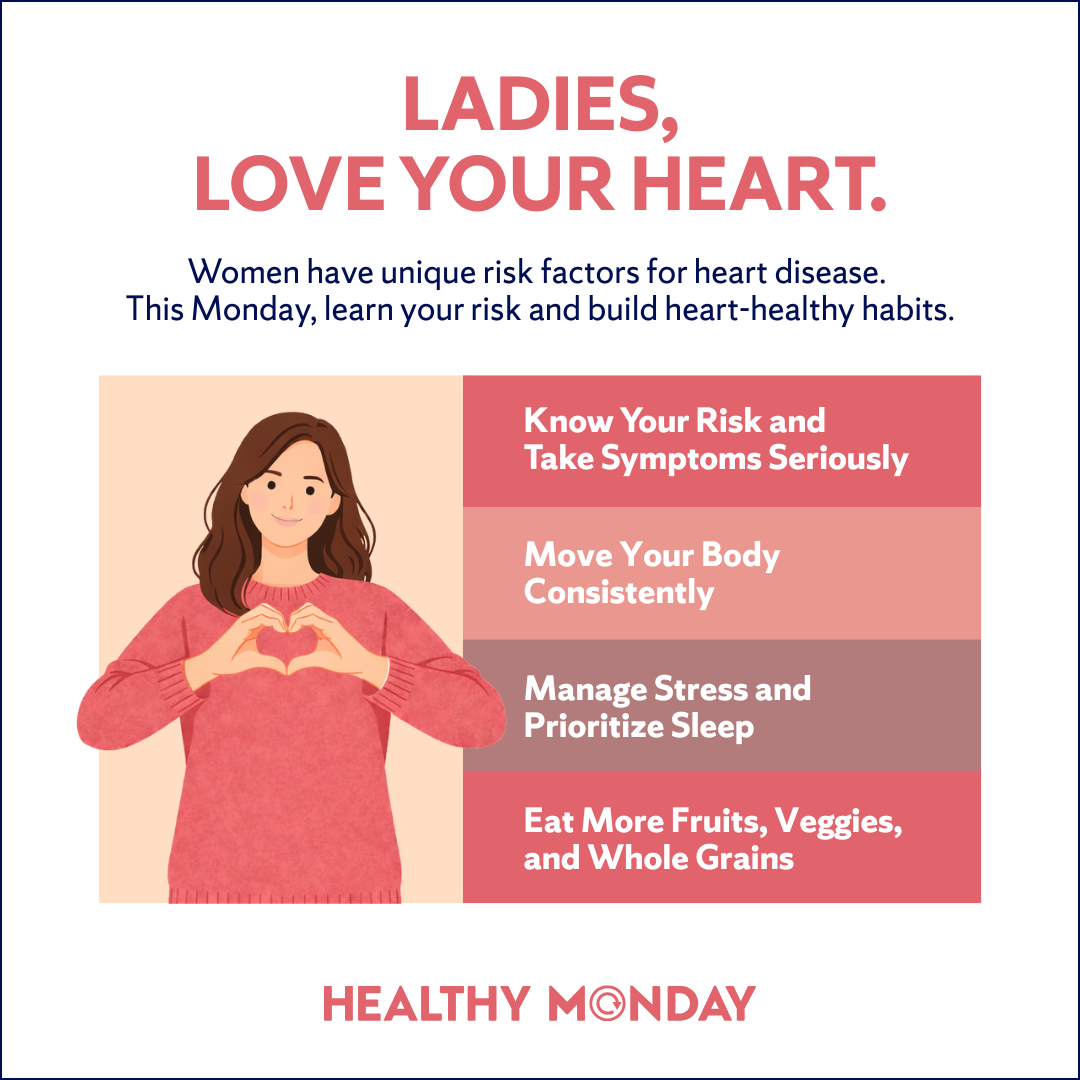
Many risk factors for heart disease, including blood pressure, cholesterol, blood sugar, and stress, can often be improved or better managed through the habits you practice each day. Here are five ways you can protect your heart health:
Start The Conversation
Keep track of blood pressure, cholesterol, and blood sugar, and talk with a health care provider about how your personal history affects risk. Pregnancy complications, early menopause, autoimmune conditions, and family history all matter, even if they happened years ago.
Build Regular Movement Into Your Week
Consistent physical activity helps lower blood pressure, improve cholesterol, and reduce stress. Walking, strength training, and everyday movement all count.
Choose Foods That Support Your Heart
Eating more fruits, vegetables, whole grains, and lean proteins can help support healthy cholesterol and blood sugar levels.
Manage Stress And Prioritize Sleep
Chronic stress can increase cardiovascular risk, particularly for women. Making time for sleep, stress management practices, and restorative breaks can help protect your heart health over time.
Take Heart Symptoms Seriously
Women’s heart symptoms are often subtle or atypical. If something feels off, seek care and advocate for further evaluation.
Heart health looks different for every woman, and understanding your risk is an important first step. By staying aware of symptoms, starting conversations with your health care provider, and practicing heart-healthy habits each week, you can take a more active role in protecting your heart.
Related Articles
Men’s Health: The Signals Your Body Is Sending
Your body sends signals worth paying attention to. Learn three simple ways men can start taking care of themselves, one Monday at a time.
How to Stay Active for a Healthy Heart
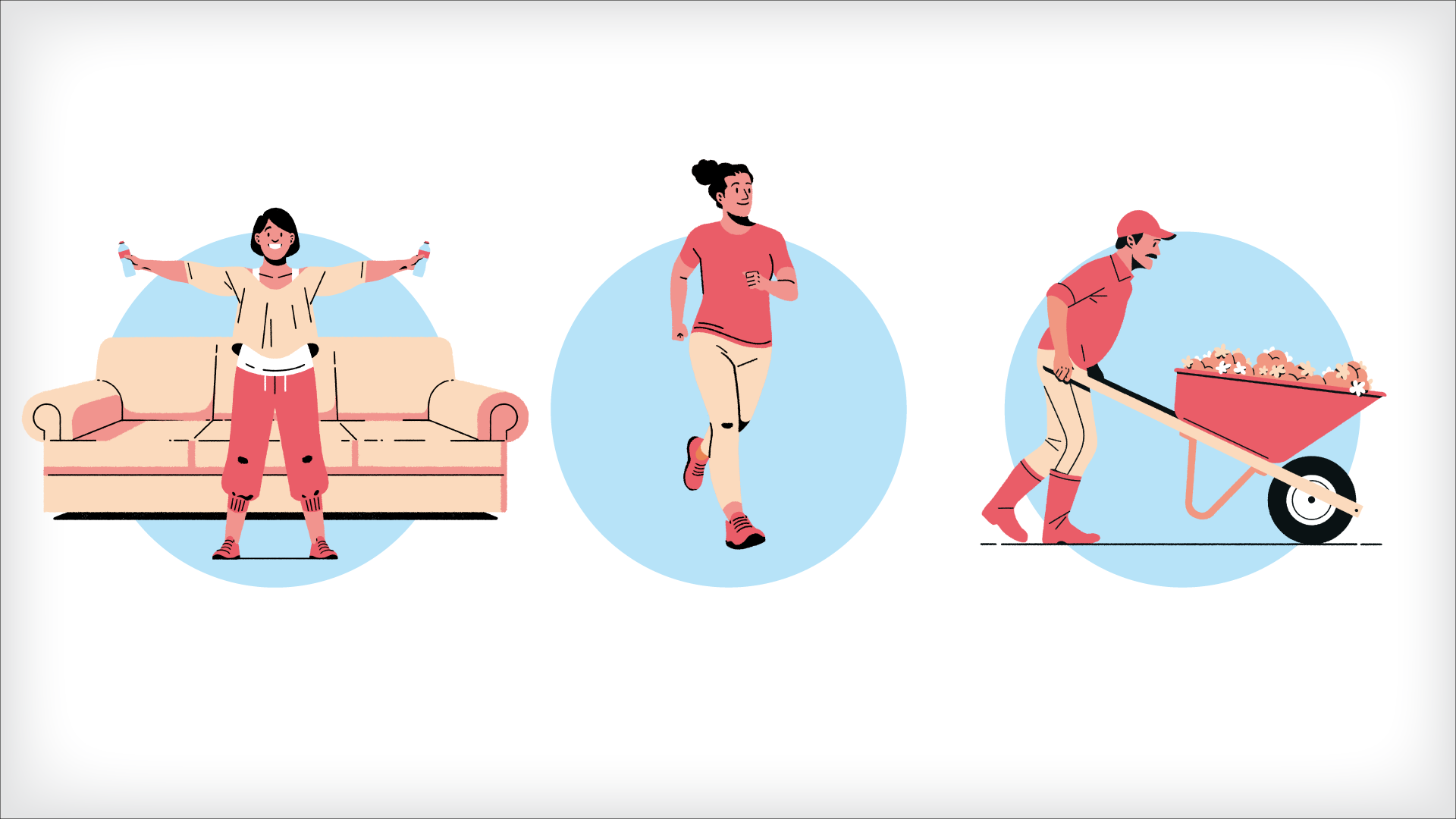
Physical activity is important for heart health. Your heart is a muscle, and it too benefits from a weekly workout.

Strengthen Your Defenses with Immune-Supporting Foods
Add these immune-supporting foods to your plate to reduce inflammation and help your body defend against everyday illnesses.