

Five Foods That Support Mental Health
Mental health is shaped by many factors, including sleep, movement, stress, and social connection. Research shows that what you eat can also play a meaningful role in how you feel, since the brain relies on a steady supply of nutrients to support mood, focus, and stress response.
When certain nutrients are in short supply, it can become harder for the brain to regulate emotions and manage everyday stress. Over time, this can influence energy levels, emotional balance, and overall well-being.
This Monday, take a closer look at a few nutrient-rich foods that research has linked to better mental health.
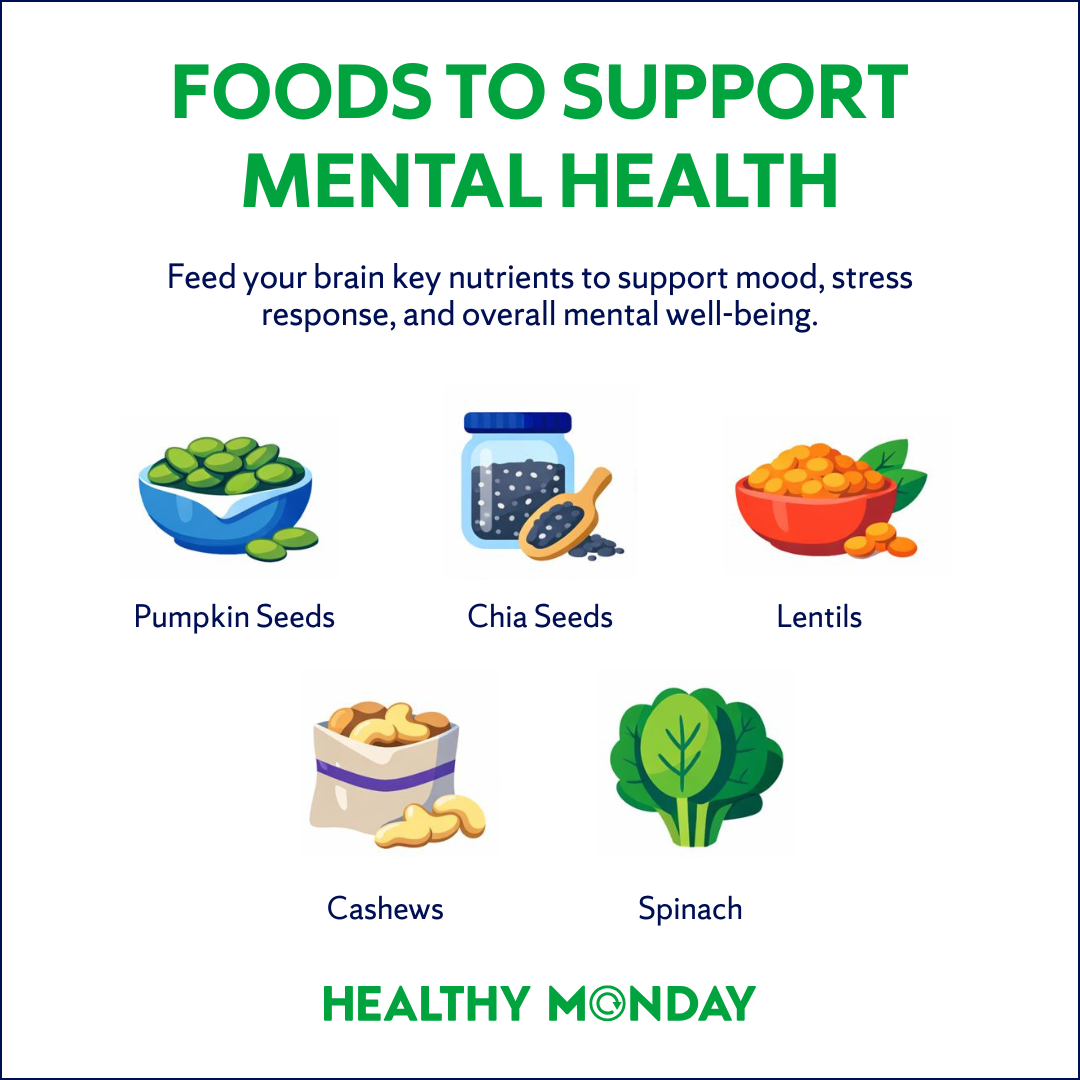
Pumpkin Seeds
Pumpkin seeds are one of the best plant-based sources of magnesium, and studies have linked adequate magnesium intake with lower levels of stress and anxiety. Magnesium plays a role in nervous system function and helps regulate the body’s stress response.
Adding a small amount of pumpkin seeds to meals or snacks can be a simple way to support magnesium intake throughout the week. Other magnesium-rich foods include chia and flaxseeds, black beans, cooked spinach, and almonds.
Chia Seeds
Chia seeds are rich in plant-based omega-3 fatty acids, which support brain health and help regulate inflammation. Research suggests that higher omega-3 intake is associated with improvements in mood and may help reduce symptoms of depression and anxiety. Chia seeds are easy to work into everyday meals, from smoothies and oatmeal to yogurt or salads. Other sources of omega-3s include flaxseeds, walnuts, and fatty fish such as salmon or sardines.
Lentils
Lentils provide several B vitamins, including folate, which support brain function, energy production, and nervous system health. Studies have found that diets rich in B vitamins are linked to lower rates of anxiety and depression. Because lentils are also high in fiber and plant-based protein, they can help support steady energy levels, which may indirectly benefit mood and focus. You can also get B vitamins from dark leafy greens, avocados, and eggs.
Cashews
Cashews are one of the strongest plant-based sources of zinc, a mineral involved in brain signaling and immune function. Research has found connections between adequate zinc intake and lower levels of anxiety. Cashews are easy to add to meals or snacks and pair well with other nutrient-dense foods. Other zinc-rich foods include legumes, whole grains, and pumpkin seeds.
Spinach
Spinach provides both magnesium and B vitamins, nutrients that play important roles in brain and nervous system function. Studies have linked higher intakes of leafy greens with better cognitive and mental health, especially as people age. Spinach works well as a base for salads, blended into smoothies, or added to soups and grain dishes.
Foods to be Mindful Of
Research also suggests that certain eating patterns may make it harder to support mental well-being over time.
- Diets high in ultra-processed foods are associated with a higher risk of depression
- Foods and drinks with lots of added sugar can contribute to energy crashes and mood swings
- Alcohol may increase anxiety and disrupt sleep
A note on mental health care:
Food can support mental wellness, but it is not a substitute for medical or mental health care. If stress, anxiety, or low mood are ongoing concerns, a healthcare provider can help you explore options that fit your needs.
This Monday, try adding one or two of these foods into meals or snacks and see how small changes can support how you feel throughout the week.
Related Articles

Build Connection Around the Dinner Table
Learn how regular shared meals can strengthen relationships, support healthier eating habits, and create meaningful time together.

Meal Prep Made Simple: Plan Ahead for Healthier Eating
A little meal prep can make healthy eating easier during a busy week. Learn what to prep, how much to make, and how to keep meals fresh and ready to go.
From Garden to Table: 5 Easy Plants for Healthier Eating
Growing your own vegetables can make healthy eating easier. Discover 5 beginner-friendly plants perfect for any garden or patio.