

Age Strong with Resistance Training
Weightlifting or strength training can feel intimidating, especially when it’s associated with heavy weights or intense workouts. But resistance training can be a more approachable way to build strength, using free weights, resistance bands, or even your own bodyweight. By working your muscles against an external force, resistance training helps strengthen muscles while also supporting balance, mobility, and overall movement, all of which become increasingly important as we age.
This Monday, learn how resistance training can fit into your routine, with simple exercises you can try at home.
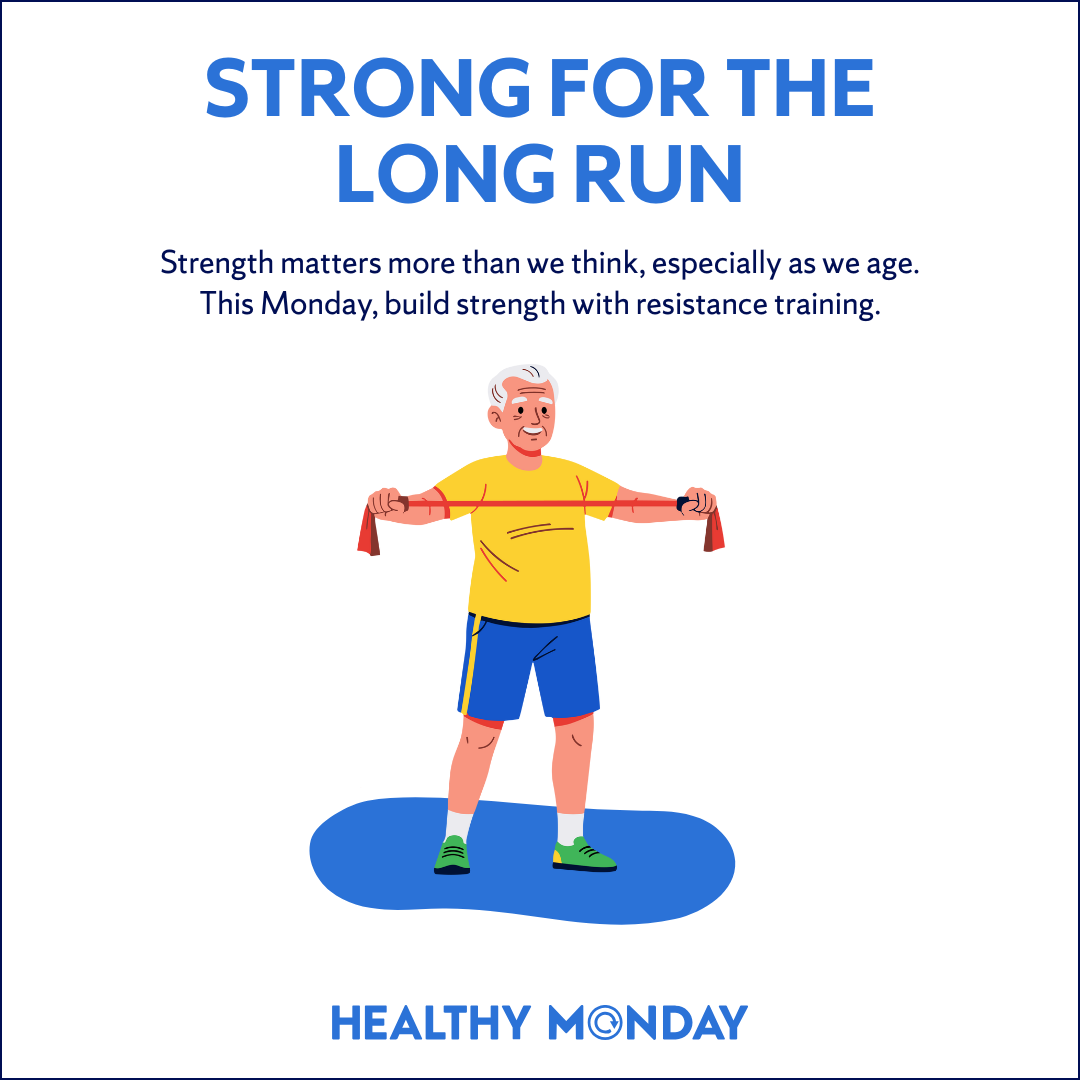
Why Building Strength Matters
Everyone, from young adults to older adults, can benefit from resistance training, and those benefits only increase as we age. Some of them include:
- Increased muscle strength
- Improved joint stability and mobility
- Reduced injury and fall risk
- Reduced risk for type 2 diabetes
Emerging research from Syracuse University’s Falk College of Sport found that simple resistance training may also support nerve health, further improving independence and quality of life as we age. To better understand what this means for everyday activity, we asked the researchers behind the study, JoCarol Shields and Jason DeFreitas, for their insights.
“Remaining physically active throughout the adult lifespan is essential for maintaining overall health,” says Shields. “Engaging in exercise that focuses on generating muscular power, with a primary goal of producing force quickly, should be a key objective.” This type of training can help improve mobility and reaction time, helping you move safely and confidently in daily life.
How to Get Started
One of the benefits of resistance training is its flexibility. You don’t need a gym, special equipment, or a long block of time to get started.
Experts recommend focusing on functional, multi-joint movements. These are exercises that use more than one muscle group at a time and mimic everyday actions like standing up, climbing stairs, or lifting objects. “Multi-joint movements train the entire movement,” explains DeFreitas, “thereby engaging multiple muscles simultaneously and helping to preserve functional independence with age.” By focusing on controlled movements with purpose, you can help your body stay responsive and better prepared for everyday moments like catching your balance or reacting to a misstep.
If you’re new to resistance training, here are some ways you can get started:
- Begin with bodyweight exercises
- Add resistance bands, light weights, or anything you have on hand as needed
- Move slowly and with control
- Focus on consistency rather than intensity
Resistance Training Exercises to Try
Here are a few expert-recommended exercises to try this week. They can be done at home and adjusted to match your comfort level.
Sit-to-Stands
- Sit in a chair with your feet flat on the floor
- Press through your feet to stand
- Slowly sit back down
- Repeat
- To increase difficulty: slow the movement or perform the movement without a chair
Step-ups
- Use a stair or sturdy step
- Step up with one foot, then step back down slowly
- Switch sides and repeat
- To increase difficulty: hold a light weight or try a reverse lunge
Seated Leg Lifts
- Sit tall with your feet on the floor
- Lift one leg slowly, then lower
- Switch sides and repeat
- To increase difficulty: add a resistance band or try a split squat
Arm Raises
- Stand tall with your arms by your sides
- Lift one arm to shoulder height
- Lower slowly and switch sides
- Repeat
- To increase difficulty: hold a light weight or try an overhead press
Wall Push-up
- Place palms on a wall at shoulder height
- Lean in slightly and bend elbows
- Push back to standing
- Repeat
- To increase difficulty: step farther away from the wall or try other push-up variations.
Begin This Monday
Healthy aging is about preserving strength, movement, and confidence over time. This Monday, choose a few resistance exercises to try and build them into your routine. Making this a habit can support your muscles, nerves, and independence at any age.
Related Articles
Match Your Movement to How You Feel
Some days you have energy to burn. Other days, not so much. Don’t skip your workout. Match your exercise to your energy and stay consistent, no matter how you feel.

The Power of a Post-Meal Walk
Just finished eating? A short post-meal walk helps support blood sugar, digestion, and daily movement goals.
How to Stay Active for a Healthy Heart
Physical activity is important for heart health. Your heart is a muscle, and it too benefits from a weekly workout.