

Slow Your Scroll to Reduce Stress
Social media helps us stay connected, discover new ideas, and keep up with people we care about. But spending a lot of time on social apps can also increase stress and anxiety, affect sleep, and leave you feeling mentally drained. When checking updates turns into extended scrolling, it can quietly crowd out time for rest, movement, and real-world connection.
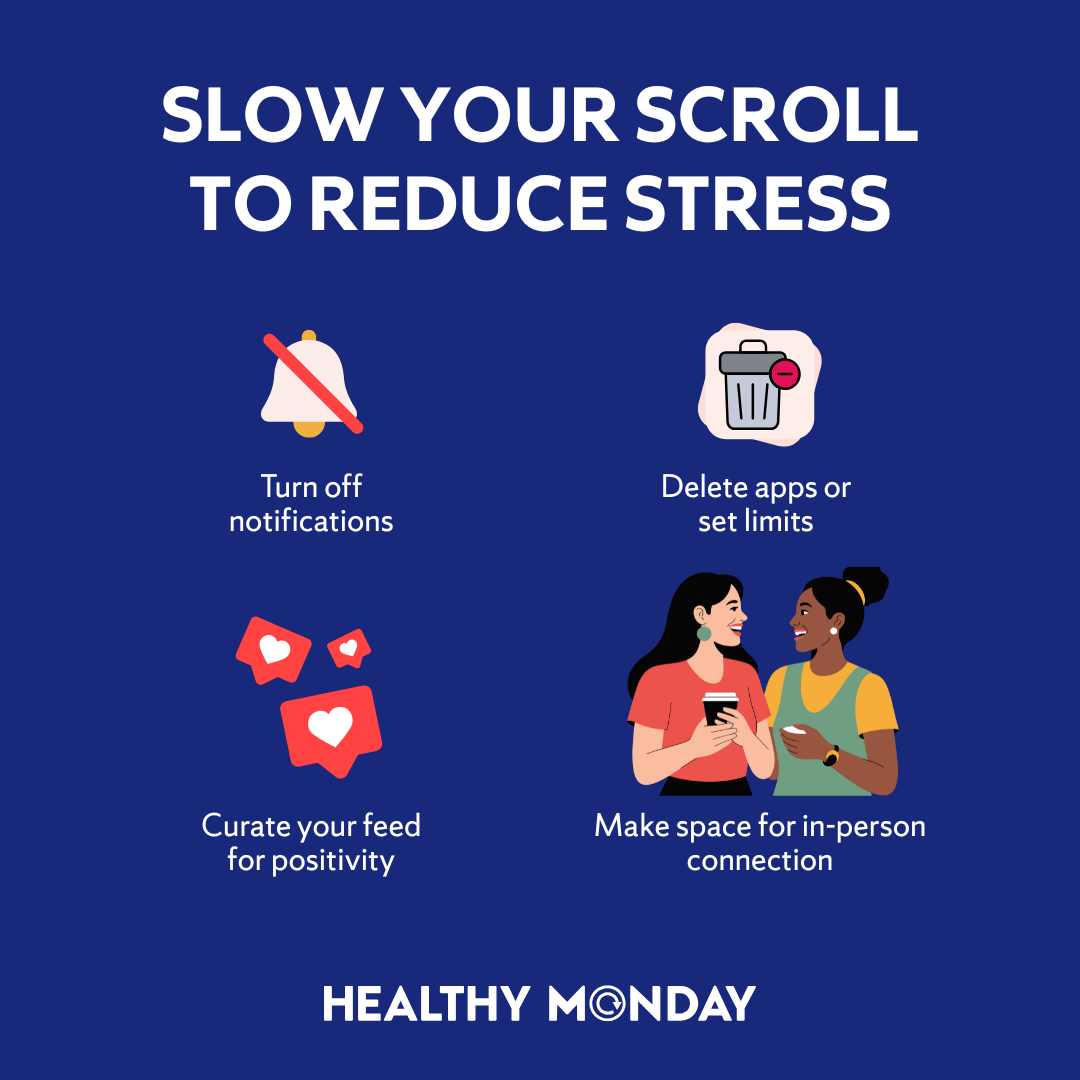
Social platforms are designed to keep you engaged, which is why it’s so easy to check “just one more time” or end up scrolling longer than you planned. But that doesn’t mean you have to quit social media altogether to protect your mental health. Building more mindful habits around when and how you scroll can help reduce stress and make it easier to step away when you want to.
If you are considering changes to your social media habits or thinking about a tech break, this Monday is a good time to start.
Limit Social Scrolling or Overall Screen Time
Start by checking your screen time in your device’s settings to get a realistic picture of how much time you spend on your phone and on specific apps. Try cutting back on one app by 10 minutes a day, or set a daily limit that reminds you to log off. If you tend to scroll automatically, set a short timer before opening a social app and stop when it goes off. Cutting back on screens, especially later in the day, can support better sleep and help reduce mental fatigue. If you use an iPhone, these instructions can help you set app limits and schedules.
Take a Short Break From Certain Apps
If one platform tends to pull you in more than others, consider deleting that app for a few days or for the week. Removing the shortcut on your home screen can make checking less automatic and give you space to reset your habits. Some people find that even a brief break from social apps helps them feel less reactive and more focused during the day.
Change Visuals
Bright colors, badges, and pop-ups are designed to grab attention. Some people find that switching their phone to grayscale makes scrolling feel less rewarding, which can help shorten time spent on social apps. Research suggests that reducing visual stimulation may help decrease phone use and stress for some people. These changes can also make it easier to put your phone down when you want to take a break from screens altogether.
Turn Off Notifications
Notifications are one of the strongest drivers of reactive checking. Turning off most alerts, especially likes, comments, and new posts, can reduce the urge to pick up your phone throughout the day. Keeping fewer notifications or turning on Do Not Disturb can support focus, and it can also make evenings feel calmer when you are trying to wind down and prepare for sleep.
Create Distance From Your Devices
It’s much easier to scroll less when your phone isn’t always within reach. Try creating a phone-free zone, such as the bedroom or the dinner table, or choosing certain parts of the day to avoid social media, like the first 20 minutes after waking or the hour before bed. When spending time with friends or family, putting phones out of sight can also make it easier to stay present together.
Be Intentional About What You Consume Online
Not all social media content affects us the same way. Research suggests that frequent social comparison and exposure to negative or stressful content can increase anxiety and stress for many people. Take time to mute, unfollow, or hide accounts that leave you feeling tense, behind, or discouraged. Balance your feed with positive media content that teaches, inspires, or genuinely helps you feel better.
You can also give your phone something else to do besides scrolling. Listening to music, trying a guided breathing exercise, or using a mindfulness app can support relaxation. Pair that with regular breaks from social apps to give your mind time to reset.
Connection Beyond the Screen
Social media can help people feel connected, especially when sharing experiences or finding community online. At the same time, it can’t replace the experience of face-to-face conversations, shared activities, and time spent with people you care about. Making room for these offline connections, along with movement and time outdoors, supports both mental and emotional well-being.
This Monday, pay attention to how your social media and screen habits affect your stress, mood, and energy. You might try turning off a few notifications, setting aside screen-free time each day, or taking a short break from an app. Over time, finding a balance between staying connected and stepping away from screens can support both mental and physical well-being.
Related Articles

Build Connection Around the Dinner Table
Learn how regular shared meals can strengthen relationships, support healthier eating habits, and create meaningful time together.
Break Out of Autopilot With a Microadventure
Discover how small moments of novelty can support mental health, keep your mind engaged, and add a little variety to your routine.

How Stress Shows Up in Men and How You Can Show Up for Them
Learn how stress shows up differently in men and simple, practical ways to support the men in your life—from food and movement to routine and reassurance.