
Men’s Health: The Signals Your Body Is Sending
Many men are great at getting things done and caring for others. Making sure the car has its oil changed and annual inspection. Mowing the lawn. Meeting deadlines at work. Planning the perfect date night. Somewhere along the way, the to-do items that keep getting pushed are the ones that matter most: their own health.
Sound familiar?
Maybe it’s been a few years since you’ve been to a doctor. Maybe it’s a nagging pain in your knee, back, or shoulder that you’ve been “stretching out” for months. Maybe it’s an exhaustion that sleep just doesn’t seem to fix, or a stress that’s stopped living in your head and started living in your body–showing up in your jaw, your shoulders, the way you snapped at someone you love last week.
Pay attention to when these things happen—they’re signals.
Here are three simple ways to begin taking care of yourself, one Monday at a time.
Start with the basics: know your numbers.
A yearly physical isn’t a big deal. Until it is. Blood pressure, cholesterol, blood sugar—most men couldn’t tell you where their numbers stand right now. But these checks are your body’s dashboard. They tell you what needs attention, often before you feel a thing. If you haven’t seen a doctor in a while, that’s the first signal worth acting on. Call your doctor’s office and schedule your annual physical. It takes less than five minutes.
Move a little and sleep like it matters.
Consistency is what makes this work, not a perfect schedule or the right gear. Taking the dog on a walk after dinner. Taking the stairs instead of the elevator. Stretching before bed. Small, regular movement improves cardiovascular health, sharpens your energy, lifts your mood, and helps you sleep better. And speaking of sleep, it’s not a luxury. It’s when your body repairs itself. If you’re cutting it short night after night to get more done, you’re borrowing against your health in a way that eventually comes due. Try swapping a late-night show for an earlier lights-out. Even thirty extra minutes a night can benefit your heart and your focus.
Pay attention to your stress: not just your symptoms.
Stress doesn’t stay neatly in your head. It shows up as tension headaches, a tight chest, a short fuse, trouble sleeping. Men are often taught to push through it, to keep going, to deal with it later. But chronic stress takes a real toll on your heart, your immune system, and your mental health. Naming it is not a weakness. Talking to someone about it, a friend, a doctor, a therapist, is one of the strongest things you can do. Saying it out loud to someone you trust is often the first step. Once you’ve learned to recognize when stress creeps in, find a practice that works for you—deep breathing, a walk, whatever helps—and make it part of your routine.
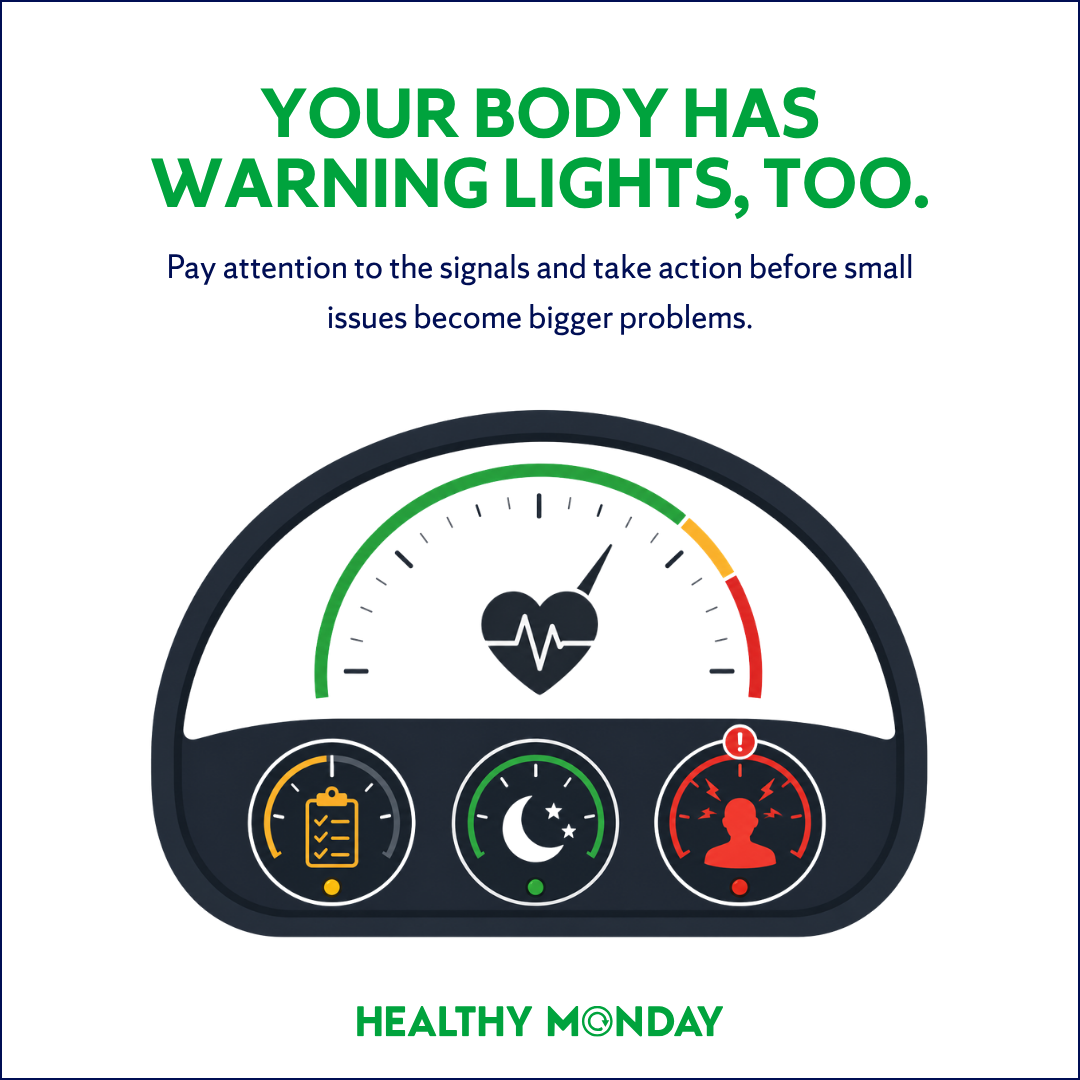
You wouldn’t drive around for two years with a warning light on your dashboard. You’d figure out what’s wrong and take care of it. Your body works the same way.
This Monday, pick one signal you’ve been ignoring and do something about it.
Related Articles

Heart-Healthy Habits for Women
Heart disease shows up differently in women. Learn key risk factors, recognize symptoms, and practice simple heart-healthy habits you can start this Monday.
How to Stay Active for a Healthy Heart
Physical activity is important for heart health. Your heart is a muscle, and it too benefits from a weekly workout.

Strengthen Your Defenses with Immune-Supporting Foods
Add these immune-supporting foods to your plate to reduce inflammation and help your body defend against everyday illnesses.