

Swimming: A Low-Impact Way to Move More
Swimming is one of the few activities that works nearly your entire body while staying gentle on your joints. The water supports your weight, making it a low-impact way to build strength, improve cardiovascular fitness, and stay active at almost any age. Whether you’re looking for a new workout or simply a refreshing way to move more, swimming can be a fun addition to your weekly routine.
Regular swimming can strengthen your heart and muscles, improve endurance, and support long-term health. Many people also find being in the water calming. The steady pace, the sound of the water, and the chance to unplug for a while can leave you feeling refreshed long after you’ve dried off.
And here’s something many people don’t realize: you don’t have to swim laps to enjoy those benefits.
How to Get Started
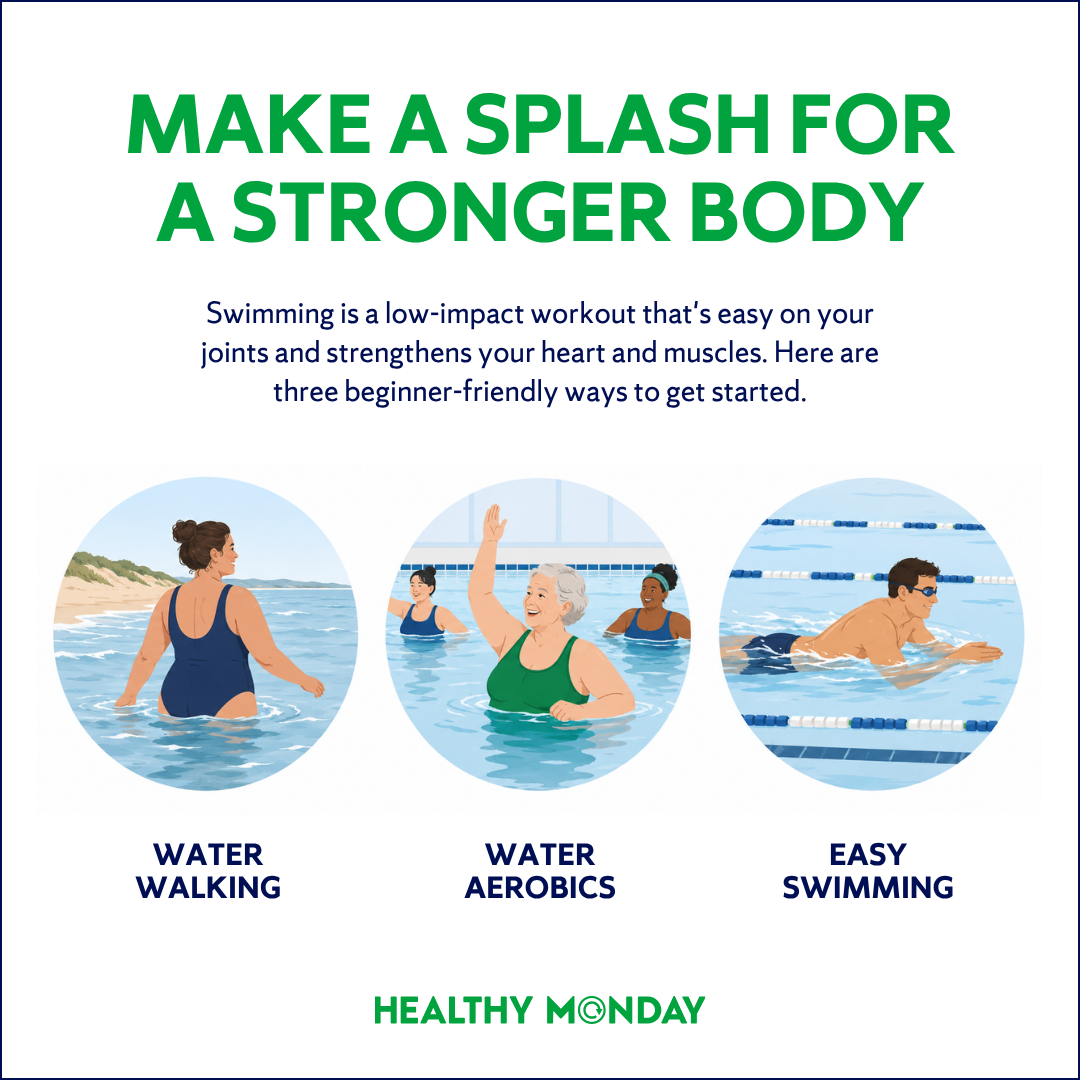
Start with Water Walking
If you’re new to swimming or easing back into exercise, begin by walking through waist- or chest-deep water. The water creates gentle resistance that helps strengthen your muscles while putting less stress on your knees, hips, and ankles than many exercises on land.
Try a Water Aerobics Class
Water aerobics is another beginner-friendly option. Many community pools, YMCAs, and fitness centers offer classes for adults of all fitness levels. It’s a simple way to build strength, improve cardiovascular health, and enjoy the encouragement of exercising with others.
Swim at Your Own Pace
There’s no need to jump in and swim lap after lap. Start by swimming one length of the pool, then take a break before going again. As you spend more time in the water, your endurance will naturally improve.
If you’re not sure which stroke to try first, the breaststroke is often a comfortable choice because of its slower pace and steady rhythm. Once that feels familiar, you might try freestyle for a more continuous workout. Choose the stroke that feels most comfortable—there’s no right or wrong way to begin.
Build Your Confidence
Swimming lessons aren’t just for children. Adults can benefit from them, too. A class can help you feel more comfortable in the water, improve your technique, and teach important water safety skills. Even if you already know how to swim, learning a few tips can make each swim feel easier and more enjoyable.
If you plan to swim outdoors, a little extra care goes a long way: choose designated swimming areas whenever possible, pay attention to local water conditions, and avoid swimming alone.
Keep It Simple
Swimming works muscles that many of us don’t use every day, so it’s completely normal to get tired more quickly than you expect. Start with 10 to 20 minutes and alternate between swimming, water walking, and resting as needed. Every visit to the pool doesn’t have to look the same.
Adults should aim for at least 150 minutes of moderate-intensity activity each week, and swimming is one way to help reach that goal. Whether you’re walking through the water at the beach, taking a water aerobics class, or swimming a few easy lengths, each dip in the water is another step toward a healthier routine.
Related Articles
Match Your Movement to How You Feel
Some days you have energy to burn. Other days, not so much. Don’t skip your workout. Match your exercise to your energy and stay consistent, no matter how you feel.

The Power of a Post-Meal Walk
Just finished eating? A short post-meal walk helps support blood sugar, digestion, and daily movement goals.
How to Stay Active for a Healthy Heart
Physical activity is important for heart health. Your heart is a muscle, and it too benefits from a weekly workout.