
Healthy Monday for Heart Health
Heart disease (also referred to as cardiovascular disease) is a term that covers a number of heart related health conditions, such as coronary artery disease, heart rhythm problems (arrhythmias), stroke, and congenital heart defects.
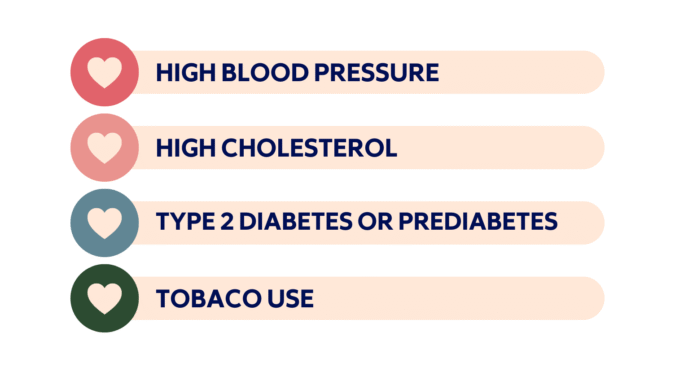
Heart disease is the leading cause of death in the United States for both men and women. Risk factors for heart disease are increasing; half of all Americans have at least one risk factor (high blood pressure, high cholesterol, type 2 diabetes or prediabetes, tobacco use).
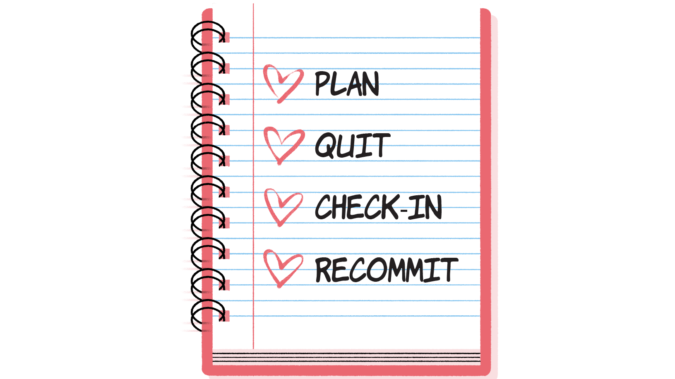
The good news is that you can manage these risk factors by making some small changes to your weekly routine. By recommitting to simple health behaviors every Monday—moving more, stressing less, eating well, and quitting tobacco—you can dramatically reduce your chances of developing cardiovascular disease.
Download the Full Healthy Monday for Heart Health Package

Heart Health
Healthy Behaviors Can Help You Reduce Your Risk of Heart Disease


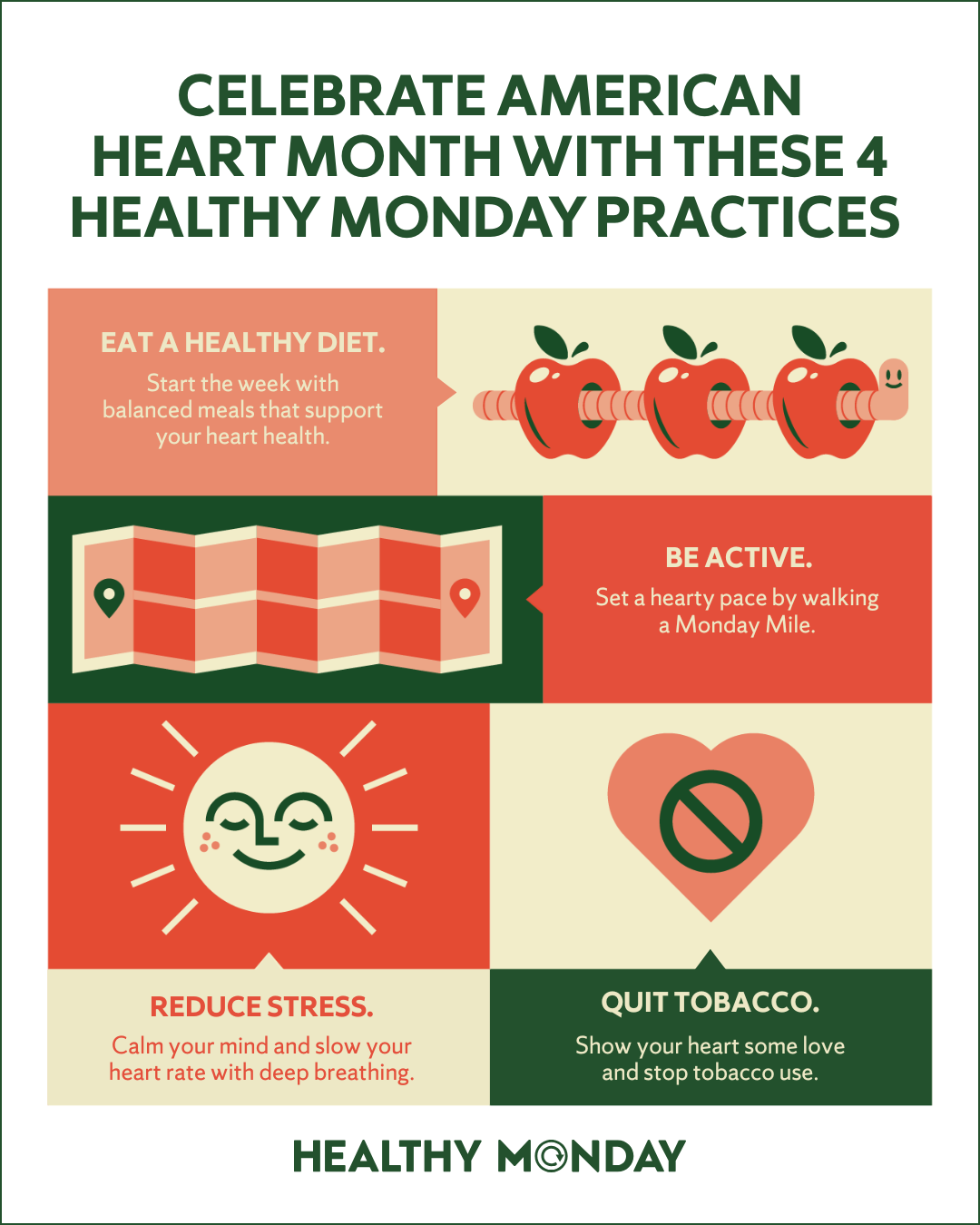
4 Facts to Know About Heart Disease:
- Heart disease is the leading cause of death in the US for both men and women across nearly all racial and ethnic groups.
- Half of all Americans have at least 1 of the primary risk factors for heart disease (high blood pressure, high cholesterol, type 2 diabetes or prediabetes, and tobacco use).
- Heart disease kills about 941,652 Americans each year, or nearly 2,500 people every day.
- Many of the risk factors that lead to heart disease are preventable or manageable.
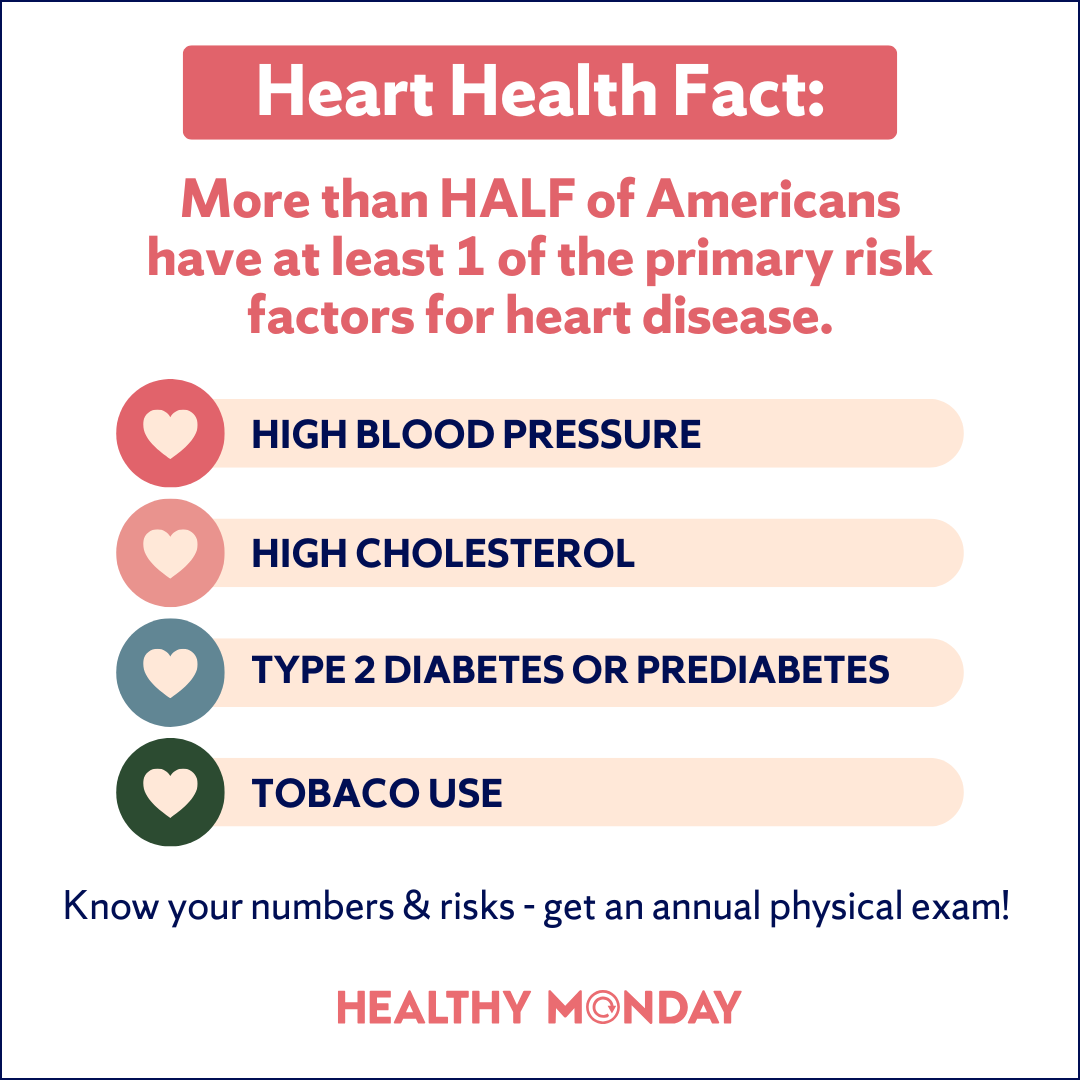
Your risk of heart disease can be divided into three categories:
1. Health Conditions:
- High blood pressure
- High blood cholesterol levels
- Type 2 Diabetes and Prediabetes
- Obesity
2. Lifestyle Behaviors:
- Eating a diet high in saturated fats, trans fats, and cholesterol
- Being physically inactive
- Tobacco Use
- Alcohol Use
3. Demographic Features:
- Age
- Race
- Genetics
- Family History
Healthy Monday behaviors that may help reduce your risk of heart disease
1. Know your numbers and risk factors
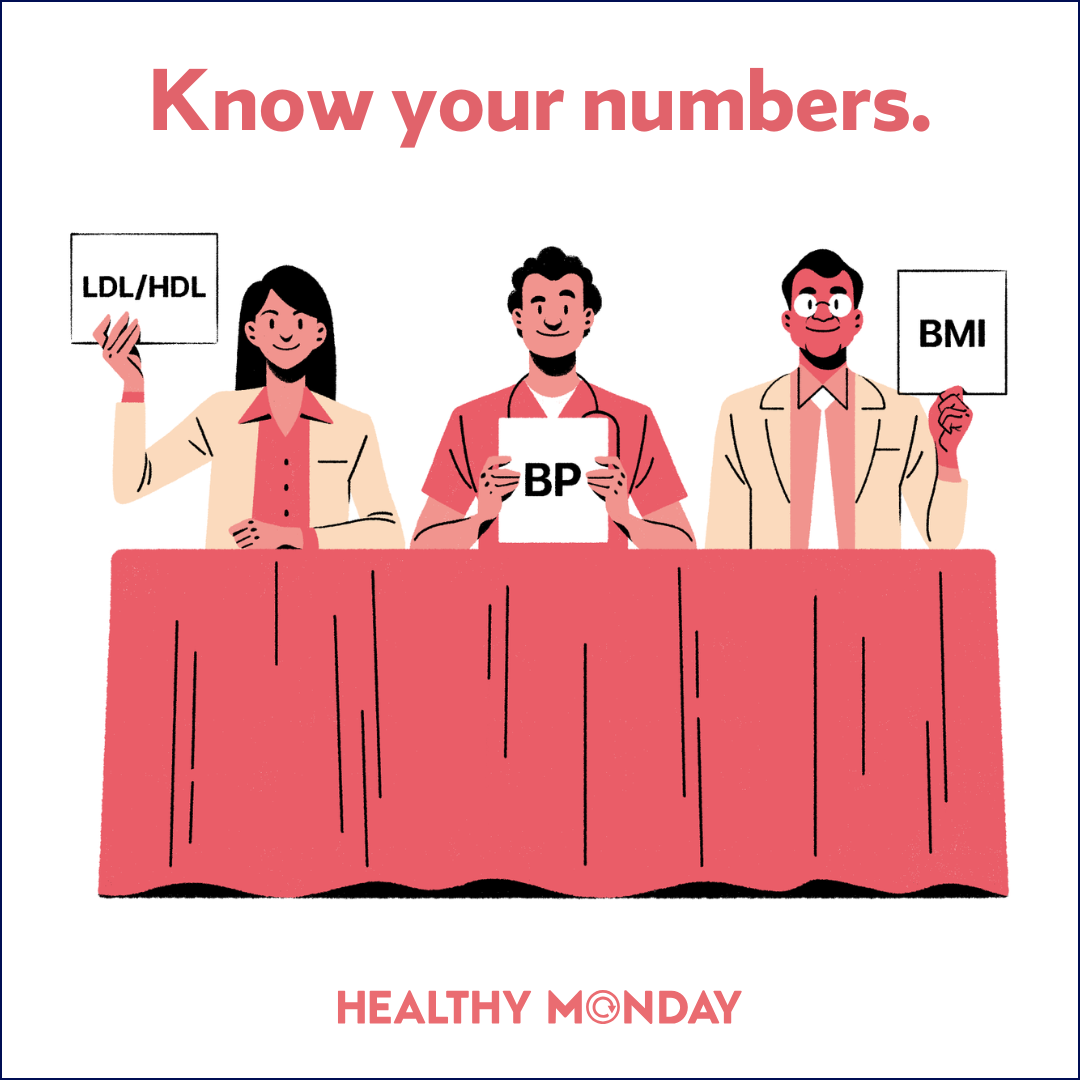
- High blood pressure and high cholesterol often have no signs or symptoms. It is important to get a yearly physical examination and have your blood pressure, cholesterol and blood glucose level checked regularly (document these numbers for later reference).
- Starting at age 45, get your cardiovascular risk score if you are at risk for heart disease.
2. Eat a balanced diet, focused on less meat and more fruits, vegetables, and legumes
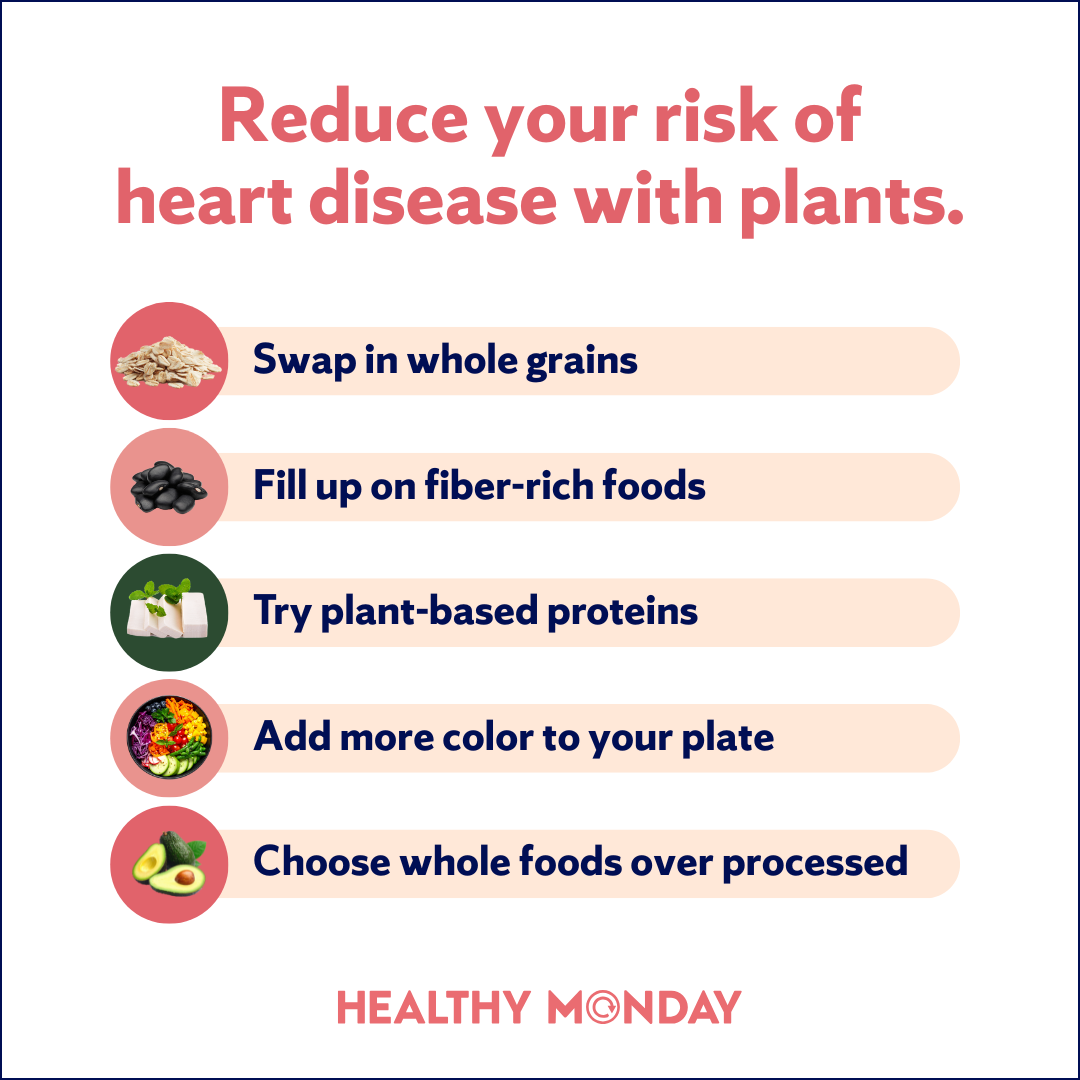
- Reduce consumption of high-sugar, high-calorie foods such as potato chips, cookies, candy, and sugar-sweetened beverages. Substitute red meat with nuts, whole grains, beans, peas, lentils, legumes and other meat alternatives like tofu, and tempeh.
- Use “Meatless Monday” as an opportunity replace animal proteins — especially red meat— with plant-based alternatives such as beans, lentils, nuts, tofu, and plant-based meat products.
3. Be and Stay Active
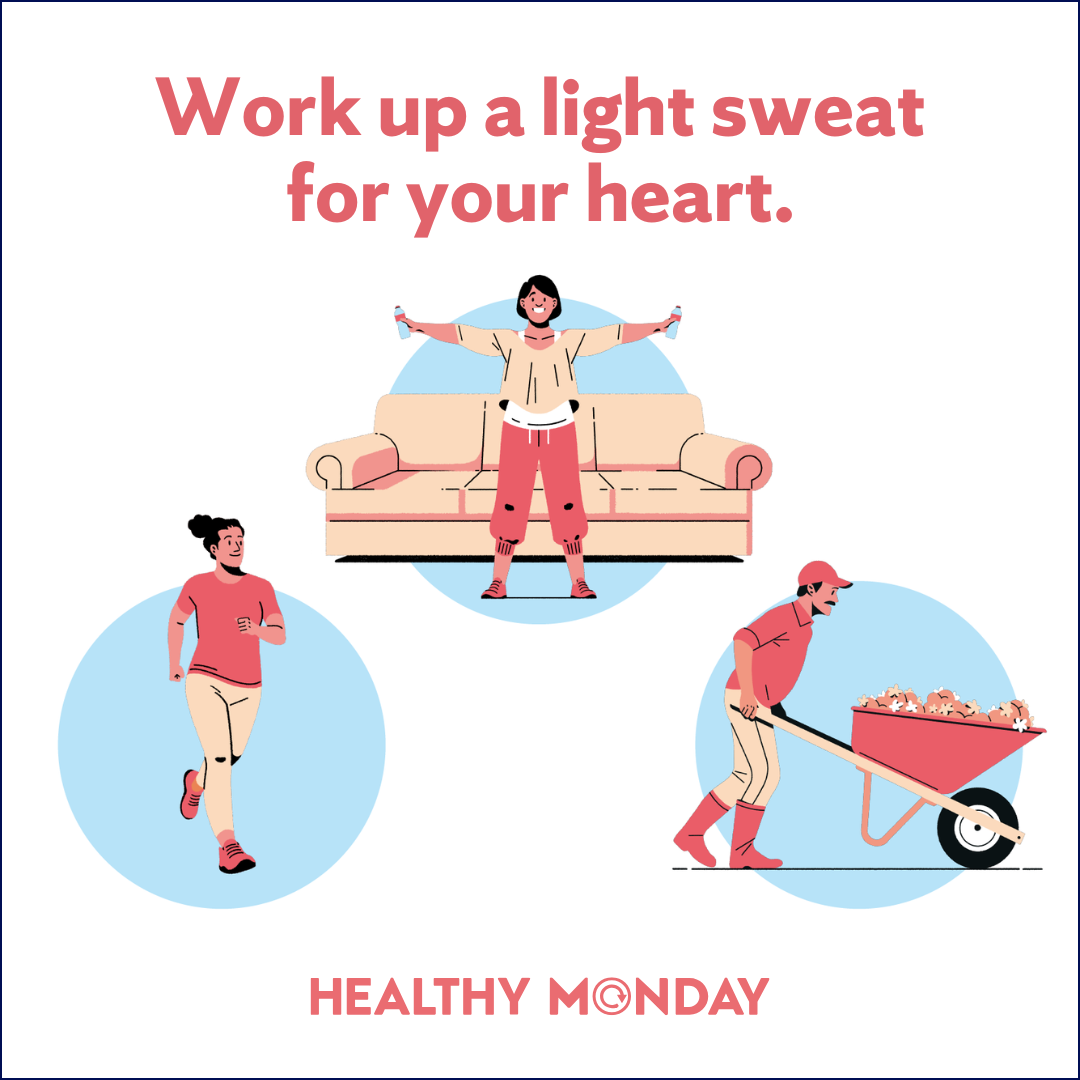
- Being physically active can help control blood sugar, lower blood pressure, and reduce bad cholesterol. Aim for 30 minutes a day.
- Add activity into your daily routine by parking a little farther from the store, suggesting a “walking date,” or trading the elevator for the stairs. Every bit counts.
- Stay active by incorporating a Monday Mile walk into your weekly routine.
4. Quit Tobacco
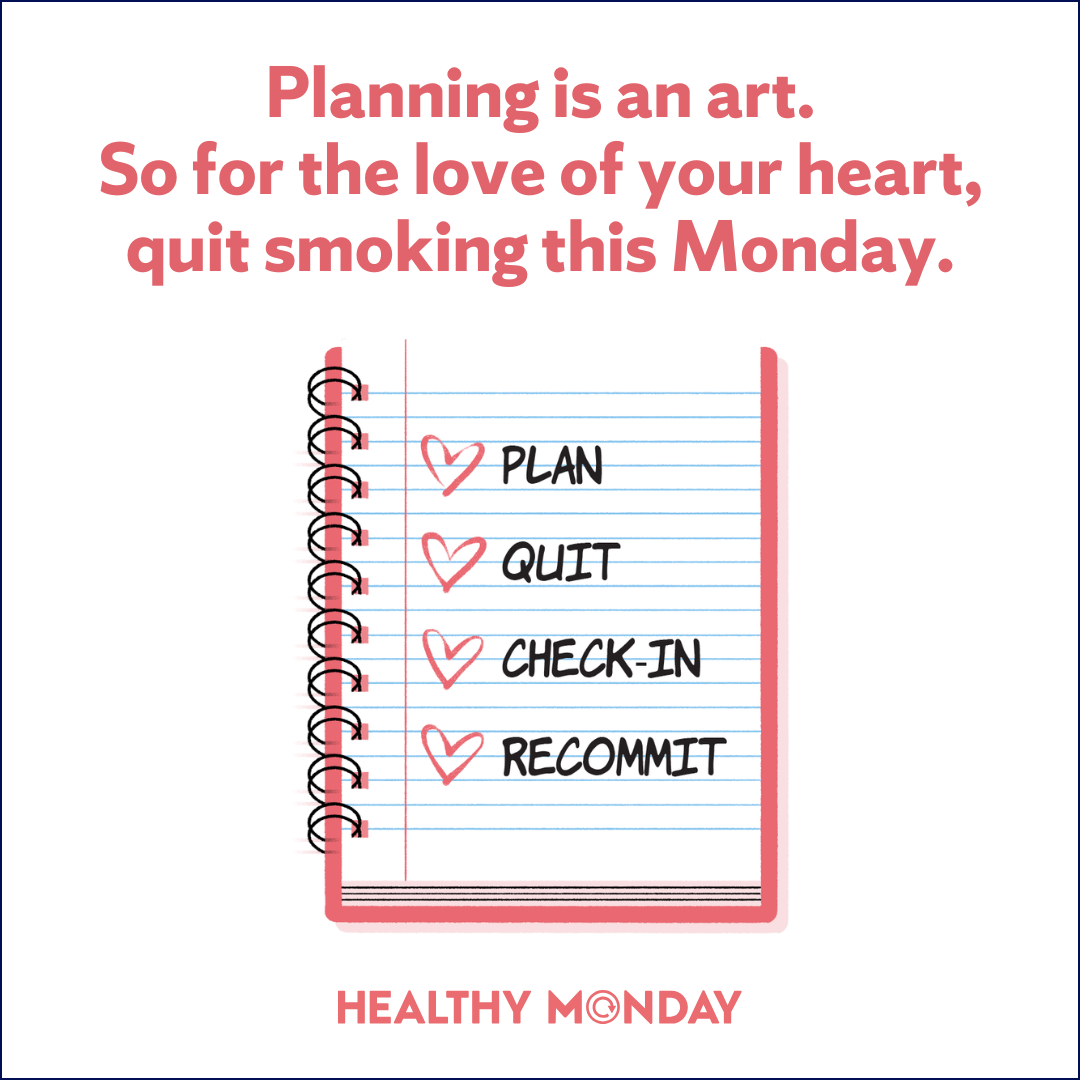
- Quitting smoking and use of other tobacco products is one of the most important things you can do to lower your risk of heart disease.
- Make a quit plan and prepare to stop smoking on Monday.
- Set up a support team to help keep you accountable and on track.
- Subscribe to the Quit and Stay Quit Monday newsletter for weekly motivation.
5. Lower Stress Levels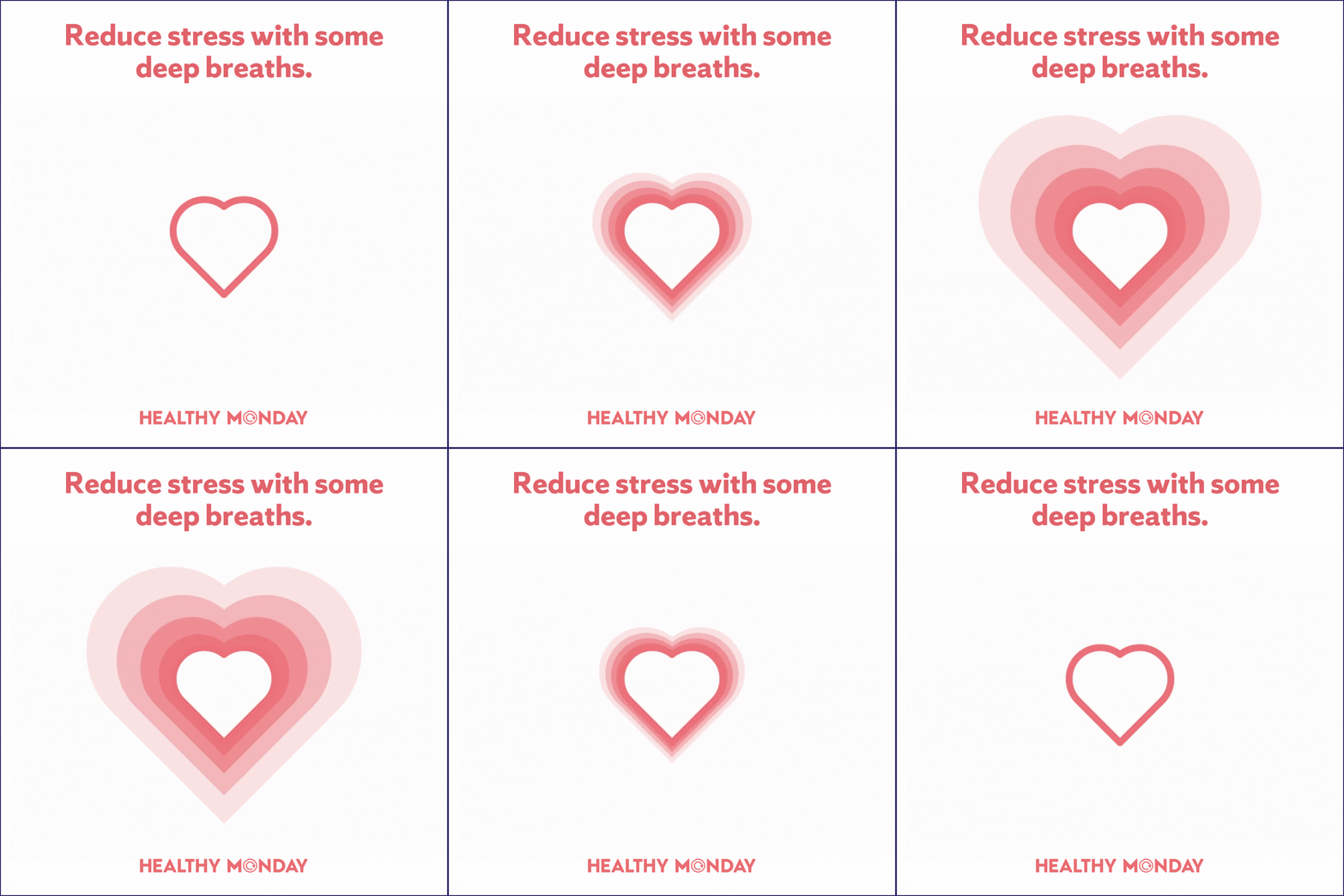
- Stress, anxiety and depression have real, physical effects on your body and are linked to heart disease.
- To help manage stress, engage in deep breathing techniques for relaxation and reduced tension.
- Relax and engage in light exercise with yoga.
Additional risk factors for heart disease include high blood pressure, obesity, overconsumption of alcohol, and genetics.
Better Understand YOUR Heart Health with these Free Resources
- ASCVD Risk Calculator
- Heart Attack and Stroke Symptoms
- How to Manage Stress to Control High Blood Pressure
- The Facts about Women and Heart Disease
- For more Heart Health tips see AHA’s Prevent Heart Disease At Any Age page