

Find Your Rhythm with “Japanese Walking”
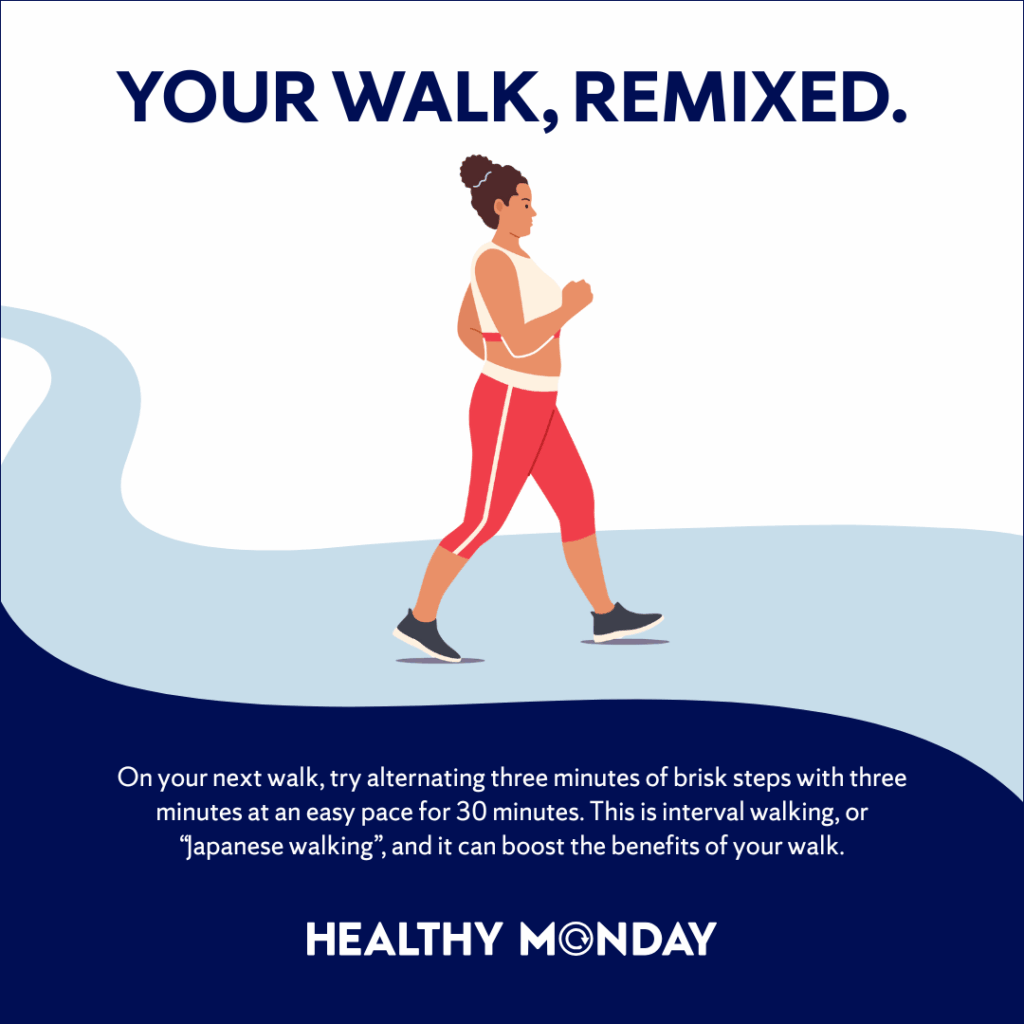
Walking has long been praised for its many health benefits. But recently, one walking practice that influencers are calling “Japanese walking” went viral on TikTok. Although it’s new to many of us, the practice–more formally known as interval walking training–has been researched for years. The routine consists of alternating between fast and slow walking for three minutes each over a set period of time.
This workout has been proven to support healthy aging and is perfect for anyone looking for a simple, low impact workout. This Monday, learn what the research says about Japanese walking and how you can try it yourself.
Benefits of Japanese Walking
With so much health advice available on social media, it can be overwhelming to know what guidance to trust. It’s helpful to pause and think about where the information comes from and whether it’s supported by research.
This form of interval walking training was introduced on a wider scale by Japanese scientists in 2007. That study, along with later research, found many benefits associated with the trend. Participants who practiced interval walking showed greater improvements in heart health, leg strength, endurance, and blood pressure compared to those walking at a consistent moderate pace. Interval walking can also help maintain muscle strength and protect against some age-associated declines in physical fitness in older adults.
How to Perform Japanese Walking
Step 1: Warm up for 3 minutes by walking at a comfortable pace to get your body ready.
Step 2: Then, walk at a brisk pace for 3 minutes.
During your brisk intervals, aim for a pace that challenges you but still feels doable. The goal is to get your heart rate up to about 70% of your maximum effort. One way to measure the best pace is by using a talk test: you’ll be breathing heavily and your heart rate will be elevated, but you can still carry a conversation.
Step 3: After that, walk at a relaxed pace for 3 minutes to recover.
Your relaxed-pace intervals help you catch your breath. Use this time to reset before picking up the pace again. The goal here is to recover at about 40% of your maximum effort. This can be difficult to measure exactly, so use your own judgement to gauge how much energy you are exerting based on how you feel.
Step 4: Continue switching back and forth between fast and slow intervals until you’ve walked for a total of 30 minutes.
This Monday, Take Your Walk to the Next Level
Try integrating Japanese walking into your routine this week. Start with what feels manageable and build from there. Like any activity, it’s important to make sure it works for you. If you have any chronic conditions or mobility limitations, it’s a good idea to consult your doctor first. You can also adjust the amount of intervals, time, and intensity over time and depending on your fitness level and goals. Go at your own pace and listen to your body.
Every step counts toward a stronger, healthier you. Happy walking!
Related Articles

The Power of a Post-Meal Walk
Just finished eating? A short post-meal walk helps support blood sugar, digestion, and daily movement goals.
How to Stay Active for a Healthy Heart
Physical activity is important for heart health. Your heart is a muscle, and it too benefits from a weekly workout.

Use Monday to Stay on the Right Track
Like New Year's resolutions in January, Mondays are ideal to stay on track with your progress and maintain your fitness goals to be more active