
You’re in bed, the lights are off, and you can’t stop tossing and turning. Sleep should be coming but you’re replaying the day, picking up your phone, and wondering why it’s so hard to simply doze off.
Good sleep doesn’t start at bedtime. It starts hours earlier, with the small decisions you make throughout your day and evening. The 10-3-2-1-0 sleep rule is a simple countdown that works with your body’s natural rhythms to help you fall asleep faster, sleep more deeply, and wake up feeling rested.
In the hours before sleep, your body is preparing for rest: winding down cortisol levels, releasing melatonin, and lowering your core temperature. When we drink caffeine too late, eat a big meal, work until bedtime, or scroll through our phones, we interrupt that process. The 10-3-2-1-0 rule works because it gives your body the time and space it needs to do what it’s designed to do.
Ready for the countdown? Each number in the rule represents how many hours before bedtime to make one simple change. You don’t have to do each rule perfectly on the first try. Start with one and see how it feels.
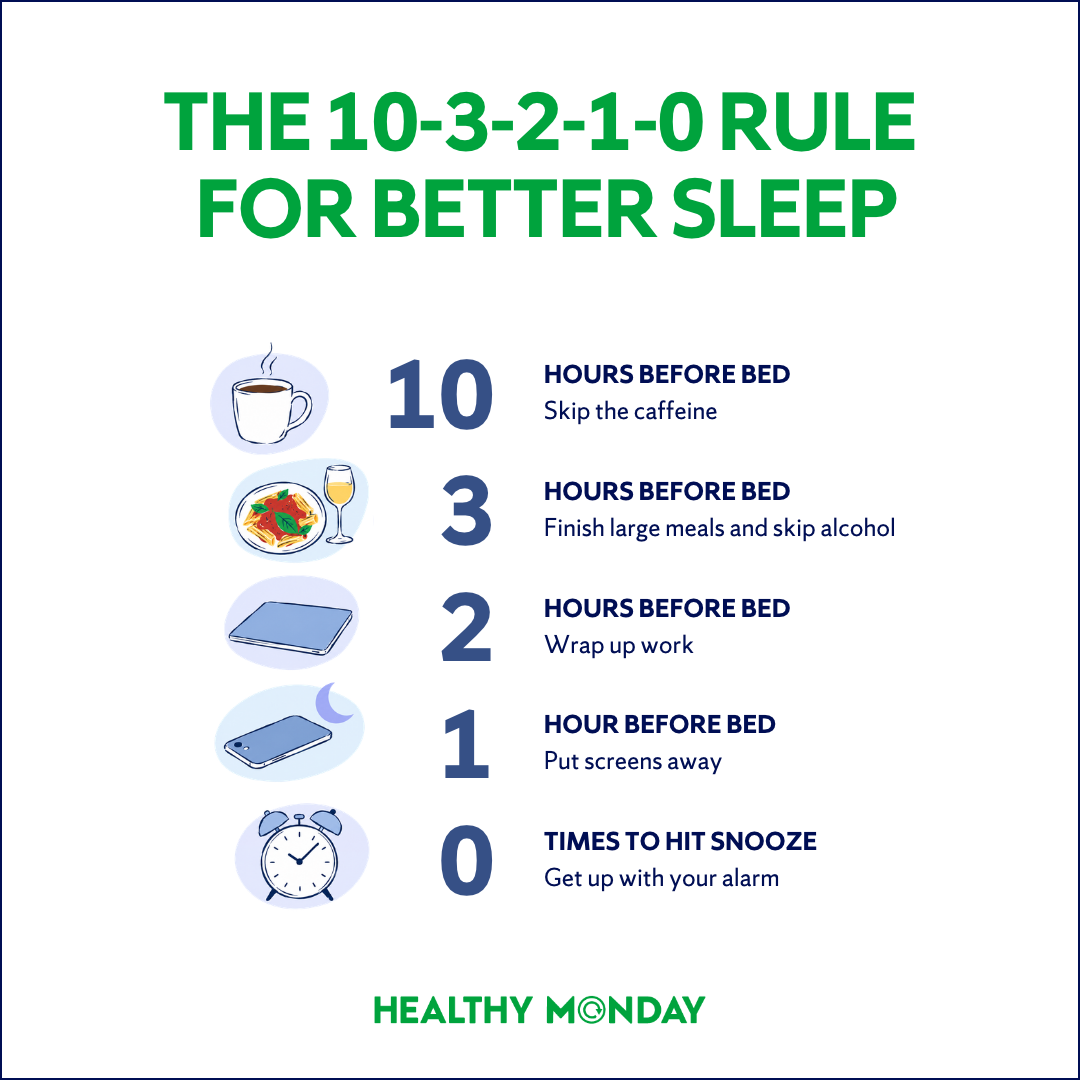
10 Hours Before Bed: Skip the Afternoon Pick-Me-Up
Caffeine has a half-life of five to seven hours, which means that cup of coffee you had at 3 p.m. is still working in your system at 10 p.m. Even if you feel like you can fall asleep fine, caffeine quietly reduces the quality of your deep sleep without you even realizing it. If you’re aiming for a 10 p.m. bedtime, make noon your cutoff time. Tea, soda, and energy drinks count too.
3 Hours Before Bed: Put Down the Fork and Skip the Nightcap
Eating a large meal close to bedtime raises your metabolism and your body temperature, both of which work together against your body’s natural wind-down process. Alcohol is worth mentioning here too. It might help you feel sleepy initially, but it disrupts your sleep cycle and suppresses REM sleep. A light snack is okay if you’re hungry, but give your body a few hours to settle before bed.
2 Hours Before Bed: Step Away from Work
This is the step most people skip. You might think answering a few emails will give you a head start on tomorrow, but one quick check can leave you thinking about deadlines and to-do lists, keeping your cortisol levels elevated and your brain in problem-solving mode. That’s exactly the opposite of where you want to be heading into sleep! Two hours before bed, close the laptop and just sit quietly for a few minutes to help your nervous system shift gears. A regular nighttime routine matters and can help you get the sleep you need to recharge for tomorrow.
1 Hour Before Bed: Put Down Your Phone
The blue light from screens suppresses melatonin production, making it harder for your body to recognize that it’s time to sleep. But it’s not just the light. It’s the stimulation, too. Social media, news, and notifications keep your brain alert and activated right when it needs to be winding down. Try reading, light stretching, or simply sitting quietly instead. Your phone will still be there in the morning.
0: No Snooze
This one extends into the morning. When your alarm goes off, get up. Hitting snooze feels like a gift, but repeatedly waking and falling back asleep can interrupt your rest and may leave you feeling groggy. Setting your alarm for the time you actually intend to wake up, and honoring it, is one of the most underrated sleep habits there is.
Better sleep is one of the most powerful things you can do for your health, your mood, and your energy. And it starts long before your head hits the pillow. This Monday, remember that bedtime isn’t just an on-off switch, and your daily habits can impact your sleep. Give your body a chance to slow down before the lights go out by trying the 10-3-2-1-0 rule.